
The Man Who Analyzed Capital
And the World That Read the Pamphlet Instead — the most misunderstood amateur mathematician in history, what he built, what broke, who in Bengal could read it, and why the party that bears his name ne

I. The Wrong Portraits
Walk into any CPI(M) office in Bengal. Three portraits: Marx, Lenin, Che Guevara. Sometimes Mao.
Marx died in 1883. Che was born in 1928 — forty-five years later. Marx never knew Che existed. The word “comrade” first appeared in English political usage in 1884, the year after Marx died. Marx reportedly told his son-in-law: “If there is one thing I am certain of, it is that I am not a Marxist.”
Three portraits are missing: Prasanta Chandra Mahalanobis, Amartya Sen, and Ashok Rudra — the Bengalis who could actually read the equations in Das Kapital, evaluate whether the models work, and build something better. They did this in Kolkata, in institutions the Left governed for thirty-four years. The party never asked them.
II. Who Marx Was
Karl Marx was a political radical first and a researcher second. He received his doctorate from Jena in 1841 — in philosophy, not mathematics. He never held a professorship, never received an academic appointment. Expelled from Prussia, France, and Belgium, he settled in London at thirty-one as a stateless exile. He lived in poverty; four of his seven children died young. Engels — running a capitalist textile factory — subsidized him for decades. Marx taught himself economics and calculus in the British Museum reading room. He received no awards, no recognition in his lifetime. Eleven people attended his funeral.
The Communist Manifesto (1848) came from Marx the activist, age twenty-nine — forty-eight pages, no mathematics, written in six weeks. Das Kapital came from Marx the researcher — three volumes, 2,000+ pages, thirty years of work. The Manifesto is genuinely his; you cannot dismiss it. But it is the hypothesis. Das Kapital is the attempted proof. The proof partially failed. The world adopted the hypothesis and never checked the proof.
The mature Marx evolved. In his 1872 Amsterdam speech, he explicitly said socialism could come peacefully through parliamentary means in the US and Britain. His only concrete political model — the Paris Commune — was radically democratic: elected officials on worker wages, instant recall, no standing army. The opposite of what Lenin and Stalin built.
III. The Three Models — Briefly
Das Kapital contains three mathematical structures. The Labour Theory of Value: every commodity’s value is determined by total labour required. Elegant but logically circular — reducing heterogeneous labour to a common unit requires market wages, which are the prices the theory is supposed to explain. The Reproduction Schemas: the economy divided into capital goods and consumption goods, with a balance condition for stability. Genuinely brilliant — anticipated Leontief’s Nobel Prize-winning work by sixty years. The Transformation Problem: converting labour values to market prices. Contains a mathematical impossibility proved by Bortkiewicz in 1907 — not a computational error, a structural impossibility.
What survived: capital concentrates (confirmed by Piketty’s r > g), crises are endogenous (confirmed by Minsky), sectoral balance matters (confirmed by Leontief). What didn’t: the labour theory of value, the transformation, the inevitability of collapse. Stable social democracies refute the last claim empirically.
Full mathematical treatment
The Mathematics of Karl Marx — interactive models · Capitalism as a Tensor Dynamical System — modern reformulation · মার্কস সকলের জন্য — Bengali, without equations
IV. The Giants Who Engaged — But Couldn’t Check the Math
Swami Vivekananda (1863–1902) Philosophy, Vedanta · No formal mathematics
Never mentioned Marx by name. Wrote: “I am a socialist, not because I think it is a perfect system, but half a loaf is better than no bread.” Predicted — before anyone — that revolution would come first in Russia or China. His socialism was spiritual, rooted in Advaitic universalism: all beings share the same consciousness, therefore suffering anywhere is suffering everywhere. This is not a mathematical model — it is an ethical foundation, and a profoundly important one. We will return to it.
Rabindranath Tagore (1861–1941) Literature, music, pedagogy · No formal economics
Visited Soviet Russia in 1930. Impressed by universal education. Warned against “the imperfect contact between the wills of the leader and those who are led.” Stalin suppressed Tagore’s critical thirteenth letter; it was published fifty-eight years later under Gorbachev. Tagore saw the soul of the problem — coercion corrodes — but had no framework to evaluate whether the underlying economic model was sound. His close friend Mahalanobis did.
Subhas Chandra Bose (1897–1945) BA Philosophy (Calcutta); Moral Sciences (Cambridge); ICS 4th rank · No mathematics
Rejected Soviet Communism for its internationalism; believed Marx’s ideas needed Indian adaptation. Wrote in 1930: “We want to liberate them from all forms of bondage.” The instinct for adaptation was correct — but adaptation requires understanding the mathematical structure of what you are adapting, and Bose’s education in philosophy and moral sciences gave him no tools for the reproduction schemas or the transformation problem.
These were giants — in philosophy, literature, and political leadership. The question is not why they didn’t evaluate the math; they worked in different domains. The question is: who in Bengal could?
V. The Bengalis Who Could
Prasanta Chandra Mahalanobis (1893–1972) Physics & Mathematics, Presidency College; First Class Physics Tripos, King’s College Cambridge; founded ISI Kolkata
The central figure. Mahalanobis read Marx’s reproduction schemas from Volume II and did what nobody else had done: he formalized them into a working mathematical model. His 1953 two-sector model divided the economy into capital goods and consumption goods — exactly as Marx had — with proper balance conditions and growth dynamics. The Feldman-Mahalanobis model is formally classified in academic literature as a “Marxist model of economic development.” Marx’s reproduction schemas are acknowledged as its direct forerunner.
Nehru appointed Mahalanobis to design India’s Second Five Year Plan (1956–1961). India’s foundational industrial strategy was built on a proper mathematical formalization of Marx’s best model — more rigorously grounded in Marx’s actual mathematics than anything Russia or China implemented.
Amartya Sen (born 1933) Economics with Mathematics minor, Presidency College; PhD Trinity College Cambridge; Nobel Prize 1998
Born in Santiniketan, supervised at Cambridge by Joan Robinson (Marxian-Sraffian tradition). Sen moved beyond Marx: where Marx asked how surplus is extracted, Sen asked what surplus actually does for human beings. His capability approach measures development by what people can do and be — education, health, freedom, dignity. His work on the Bengal Famine of 1943 proved the famine resulted not from insufficient food but from a collapse in purchasing power — a structural argument in the Marxian tradition, executed with precision Marx lacked.
Ashok Rudra (1925–2003) Economics and Statistics, ISI Kolkata; worked under Mahalanobis
The bridge between the mathematical and political traditions. Worked under Mahalanobis at ISI, applied quantitative methods to the Marxist question of class structure in Indian agriculture — the very question the Left Front claimed to address. He could speak both languages. The party preferred slogans to his findings.
VI. India’s Plan vs. Russia and China
This inverts the usual narrative: India’s socialist planning was mathematically superior to the Soviet Union’s or China’s — because it was designed by a statistician, not a revolutionary.
Soviet Union: Stalin used Feldman’s model as cover for forced collectivization, ignoring the intersectoral balance conditions the model required. Agriculture was gutted to feed industry — a direct violation of Marx’s and Feldman’s own framework. Result: the Ukrainian famine (Holodomor), millions dead.
China: Mao had no mathematical training whatsoever. The Great Leap Forward ordered backyard steel production while neglecting agriculture — a catastrophic violation of the two-sector balance condition Marx explicitly identified. An estimated 30–45 million died. Mao had apparently never read Volume II.
India: Mahalanobis designed the Second Five Year Plan on a proper mathematical formalization, calibrated with data from the National Sample Survey he himself created, implemented within a democratic framework permitting course corrections. India’s planning had failures — bureaucracy, the licence raj, insufficient attention to agriculture — but it did not produce famine. The planning was imperfect but scientific.
VII. What the Countries Prove
The twentieth and twenty-first centuries ran the experiments. The results are clear enough to draw conclusions.
🇷🇺 Russia / 🇨🇳 China / 🇨🇺 Cuba — Central Planning
Central planning can achieve rapid heavy industrialization and strong public goods (Cuba’s healthcare, Soviet literacy). But it cannot solve the information problem — a planning committee cannot process the distributed knowledge that market prices aggregate automatically. The result is chronic misallocation. The Soviet Union collapsed from internal informational entropy. China survived by reintroducing markets (Deng Xiaoping, 1978) while keeping authoritarian governance — but its Gini coefficient (0.38 and rising) suggests it is approaching the inequality trap.
🇺🇸 United States — Minimal Redistribution
The closest to pure capitalism among developed nations. Results: top 1% owns more wealth than bottom 90%, Gini coefficient 0.39 (highest in the developed world), declining life expectancy. The mathematical model predicts exactly this when the tax parameter falls below the critical threshold τ* = 1 − g/r. The US demonstrates the oligarchic attractor.
🇸🇪🇩🇰🇳🇴🇫🇮 Nordic Countries — Parameters Set Right
Full market economies — private ownership, competition, profit motive. But tax rates (40–50%) ensure after-tax returns roughly equal growth rates (r(1−τ) ≈ g), preventing runaway concentration. Strong institutions keep enforcement above the corruption trap threshold. These are not socialist countries. They are capitalist countries that solved the parameter-setting problem Marx identified but couldn’t solve.
🇩🇪 Germany — Social Market Economy
Codetermination (workers on corporate boards), strong vocational training, export-oriented manufacturing, constitutional social welfare commitment. Gini 0.31. Proof that globally competitive capitalism is compatible with the intersectoral balance Marx’s reproduction schemas require — achieved through industrial policy and institutional design, not central planning.
🇨🇦 Canada — The Gradient
Moderate taxes, universal healthcare, stronger safety net than the US, weaker than Scandinavia. Gini 0.33. Demonstrates the smooth relationship: as you move parameters from US levels toward Nordic levels, outcomes improve monotonically. No cliff, no discontinuity. Refutes the claim that redistribution “kills growth.”
🇬🇧 England — Movement Between Basins
1945–1979: postwar consensus (NHS, council housing, strong unions, progressive taxation) — social-democratic basin. Thatcher (1979–1990): tax cuts, union-breaking, deregulation — pushed Britain across the bifurcation boundary. Today: highest inequality in Western Europe, crumbling NHS, stagnant wages. Brexit was a political earthquake generated by structural economic instability. Proof that the social-democratic equilibrium is not permanent — policy choices can move the parameters past the critical threshold.
🇸🇬 Singapore — Governance as the Variable
Lee Kuan Yew took a resource-poor island of 1.9 million people and made it one of the world’s richest economies in one generation. How? Zero tolerance for corruption, world-class education aligned with economic needs, aggressive foreign investment attraction, 90% public home ownership, and a government that honoured its commitments. Per capita GDP went from $500 in 1965 to $14,500 by 1991 — a 2,800% increase. Singapore proves that when the governance parameter (enforcement ε) is set high enough, rapid transformation is possible even without natural resources.
VIII. The Idol-Worship Irony
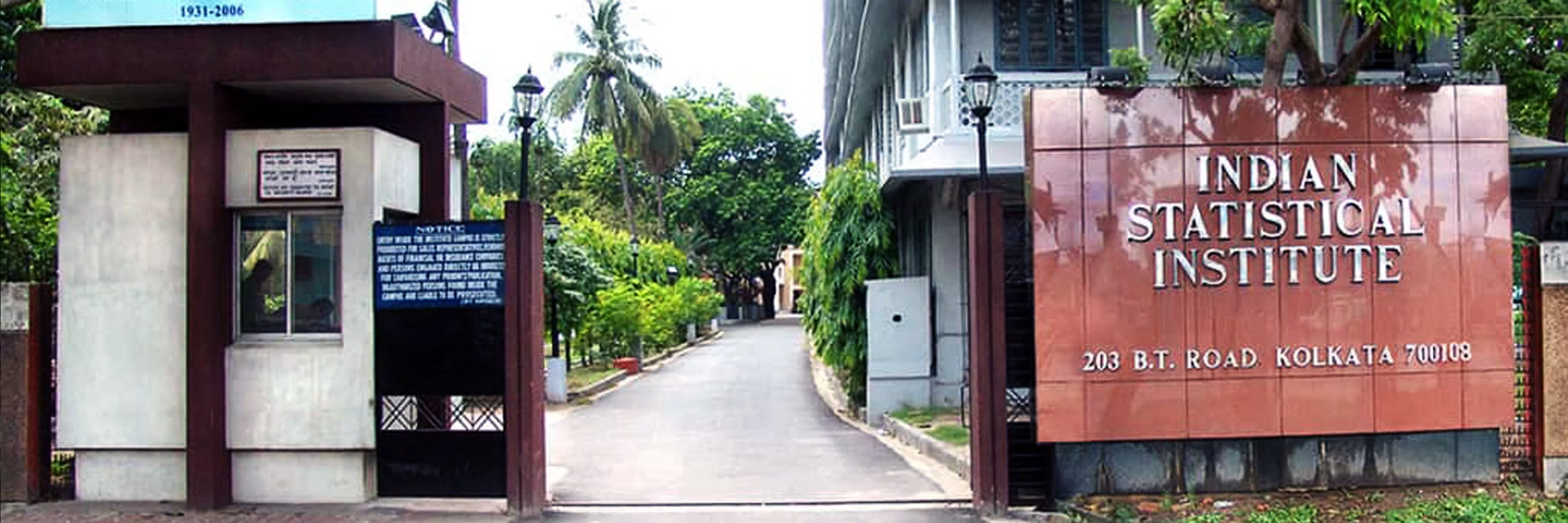
The CPI(M) governed West Bengal from 1977 to 2011 — the state where Mahalanobis built ISI, where his formalization of Marx was created. In thirty-four years: not one mathematical refinement of the models it claimed to follow. Not one paper. Not one equation. The party pointed to Moscow and Beijing. The actual model of scientific socialist planning — built by a Bengali, in Kolkata — sat unread at ISI Baranagar, a few kilometres from Alimuddin Street.
And here is the deepest irony: the CPI(M) is founded on dialectical materialism — a philosophy that explicitly rejects idol worship, religious dogma, and the deification of individuals. Marx despised personality cults. Yet the party turned Marx into exactly what he would have hated — an icon. His portrait hangs like a deity in a temple. His words are quoted like scripture, not examined like hypotheses. The party that claims to oppose worshipping gods made a god out of Marx. They replaced the rituals of religion with the rituals of ideology — the same garlands, the same unquestioning reverence, the same fury at heretics who dare to ask: “But is the proof actually correct?”
Marx, the man who spent thirty years in a library checking proofs, would have found this unbearable.
IX. A New Path for Bengal
What follows is not satire. It is a serious proposal, grounded in the mathematics, the evidence, and the intellectual tradition that Bengal already possesses.
1. Hire someone who can explain Marx’s mathematics to you
The party leadership does not need to learn linear algebra. It needs to hire an advisor — an economist or mathematician — who can explain, in plain Bengali, what the reproduction schemas actually say, why the transformation problem fails, what Piketty’s r > g means for Bengal’s wealth distribution, and how the balance conditions apply to the state’s sectoral structure. Ask questions. Demand clarity. If the advisor cannot explain it in language a non-specialist can act on, find a better advisor. The goal is not to turn politicians into mathematicians — it is to ensure that policy decisions are informed by the actual models, not by slogans derived from a pamphlet written in six weeks.
2. Hire economists who understand what the countries proved
The evidence from the twentieth and twenty-first centuries is unambiguous. Engage economists — from India or abroad, paying competitive compensation as Singapore does — who can brief the party on why the Nordic model works, why the US model produces oligarchy, why central planning failed, and what the Singapore transformation actually required. This is not ideological contamination; it is due diligence. A party that refuses to study evidence because the evidence might contradict its beliefs is not a political party — it is a religious order.
3. Engage Bengal’s own institutions
The researchers are already there. ISI Kolkata — Mahalanobis’s own institution. IIT Kharagpur. Jadavpur University. IIEST Shibpur. Presidency University. University of Burdwan. Calcutta University. Medical College Kolkata and NRS Medical College (for health economics and public health planning). Bengal has more mathematical economics and statistical infrastructure per square kilometre than almost anywhere in the developing world. Engage the professors. Commission studies. Fund research chairs. Find the scholars you can work with — people who understand both the mathematics and Bengal’s ground reality. If local talent is insufficient for specific problems, hire from abroad at Singapore-level compensation. Lee Kuan Yew built Singapore’s civil service by paying world-class salaries to attract world-class talent. The principle is simple: if you want first-rate work, you cannot offer third-rate pay.
4. Apply the Singapore lesson to Kolkata
Singapore in 1965 was a swamp with 1.9 million people. West Bengal has 100 million — the comparison is not one-to-one. But Kolkata — with its IT corridor (Salt Lake, New Town), its academic institutions, its port, its educated workforce — can become a Singapore-like knowledge economy hub within a larger state. The Singapore playbook is known: zero tolerance for corruption, education aligned with industry needs, aggressive foreign investment attraction, world-class infrastructure, and a government that keeps its promises. This is not a 2-year project — Singapore took 25 years. But a 10–15 year transformation of Kolkata into a globally competitive knowledge hub is achievable if the governance variable is set right.
The bottleneck is not capital, talent, or geography. The bottleneck is governance quality — enforcement ε in the dynamical systems framework. India’s deeper structural problems — the gap between the state’s promises and its citizens’ lived experience — are fundamentally problems of institutional capacity, not of ideology. Kolkata’s transformation requires what Singapore required: credible institutions, zero corruption, and a political class that understands development is an engineering problem, not a theological one.
5. Replace the portraits — and consider the name
Take down Che Guevara — a brave man Marx never met who has nothing to do with reproduction schemas. Put up Prasanta Chandra Mahalanobis — the Bengali who formalized Marx’s best model and built India’s development plan. Put up Amartya Sen — who showed development must be measured by human capability. Put up Sraffa — who resolved the transformation problem.
And if the party truly wants to honour its intellectual tradition: reconsider the name. Not the Communist Party of India (Marxist-Leninist). The Communist Party of Mahalanobis. Because Mahalanobis actually completed what Marx attempted — he took the best mathematical structure in Das Kapital, formalized it rigorously, and used it to build something real. If you must name your party after an intellectual tradition, name it after the Bengali who completed the proof, not the German who left it incomplete.
6. Find the ethical foundation in your own tradition
ॐ सर्वे भवन्तु सुखिनः
सर्वे सन्तु निरामयाः
सर्वे भद्राणि पश्यन्तु
मा कश्चिद् दुःख भाग्भवेत्
“May all beings be happy. May all be free from illness.
May all see auspiciousness. May none suffer.”
This Shanti mantra — recited for millennia across Bengal and India — expresses in four lines what modern welfare economics writes as: maximize the minimum well-being across all individuals. It is the Rawlsian maximin principle. It is Sen’s capability floor. It is the ethical foundation that Marx’s mathematics needs but never had.
Vivekananda understood this. His Advaitic universalism — the conviction that all beings share the same fundamental consciousness, that separation is illusion, that suffering anywhere diminishes everyone — is not a vague spiritual sentiment. It is a welfare function. It says: the measure of a society is not its GDP, not its steel output, not its military power, but whether all its members can live with dignity. The concept of dharma — often mistranslated as “religion” but more accurately understood as the sustaining order, the principle that holds society together — is precisely the institutional enforcement parameter ε in the dynamical systems framework: the force that prevents the system from collapsing into the corruption trap. Marx diagnosed the structural inequality. Vivekananda articulated the ethical goal. Mahalanobis built the mathematical bridge. Sen measured the outcome. The complete framework requires all four.
It is no accident that many of the greatest hymns of Indian civilization begin with invocations of universal peace — śāntiḥ, śāntiḥ, śāntiḥ. But peace is not passive. The Bhagavad Gita — which Vivekananda placed at the centre of his teaching — insists that peace requires action. Karma Yoga is not quietism; it is disciplined work without attachment to personal reward. This is, at its core, the ethic of good governance: work for the welfare of all, measure results, correct course, do not cling to ideology when the evidence says otherwise.
Bengal does not need to import its ethical framework from nineteenth-century Germany. It has its own — older, deeper, and mathematically compatible with everything modern economics has discovered. The question is whether Bengal’s political class has the intellectual honesty to draw on Vivekananda as seriously as it draws on Marx, and on Mahalanobis as seriously as it draws on Lenin.
X. Conclusion
Marx was not a professor. He received no awards. He lived in poverty. Eleven people came to his funeral. And yet his questions — why does wealth concentrate? why do crises recur? what determines the structure of production? — are as alive today as in 1867. Piketty confirmed the concentration. Minsky confirmed the crises. Leontief and Mahalanobis confirmed the sectoral structure. The questions were right. The tools were insufficient. The proof was incomplete.
Bengal produced the people who could complete the work. Mahalanobis formalized the reproduction schemas. Sen extended the analysis to human capability. Rudra applied quantitative methods to agrarian structure. The institutions are standing. ISI Baranagar is a few kilometres from Alimuddin Street. The tradition is alive.
The party that claims Marx’s name has a choice. It can continue hanging portraits of a guerrilla fighter Marx never met, greeting each other with a word Marx never used, and treating a nineteenth-century researcher’s incomplete proofs as sacred scripture — becoming, in the process, exactly the kind of idol-worshipping, dogma-reciting institution that dialectical materialism was supposed to abolish.
Or it can do something harder, braver, and more Marxist than anything the party has done in half a century: sit in the library, learn the mathematics, check the proofs, consult the economists and statisticians who work in its own city, find the ethical foundation in its own civilizational tradition, study the countries that got the parameters right, and build a Bengal that works — not for a class, not for a party, but for sarve, for all.
The equations are waiting. The institutions are in Kolkata. The ethical tradition is in the Upanishads. The work remains to be done.
Essential reading
Marx: Das Kapital Vol. II Ch. 20–21, Vol. III Ch. 8–10; Mathematical Manuscripts
Corrections: Sraffa (1960), Steedman (1977), Morishima (1973), Bortkiewicz (1907)
Modern inheritors: Piketty (2014), Shaikh (2016), Godley & Lavoie (2007), Minsky (1986)
Bengali tradition: Mahalanobis (1953), Sen (1981, 1999), Rudra
Mathematical tools: Strogatz (2015), Acemoglu & Robinson (2012), Ostrom (1990)
Ethical foundation: Vivekananda, Complete Works; Bhagavad Gita (esp. Chapters 1–6 on Karma Yoga); Dharma as Unstable Equilibrium; The Unfinished State: India’s Structural Problems — all by Anjan Goswami
Companion articles: The Mathematics of Karl Marx · Capitalism as a Tensor Dynamical System · Marx the Mathematician: Models, Flaws, Nations · মার্কস সকলের জন্য
© Anjan Goswami, 2026